The Concert Room welcomes back Ike Richman as we go inside the closing events and celebrations during the Spectrum's final season!
The Program
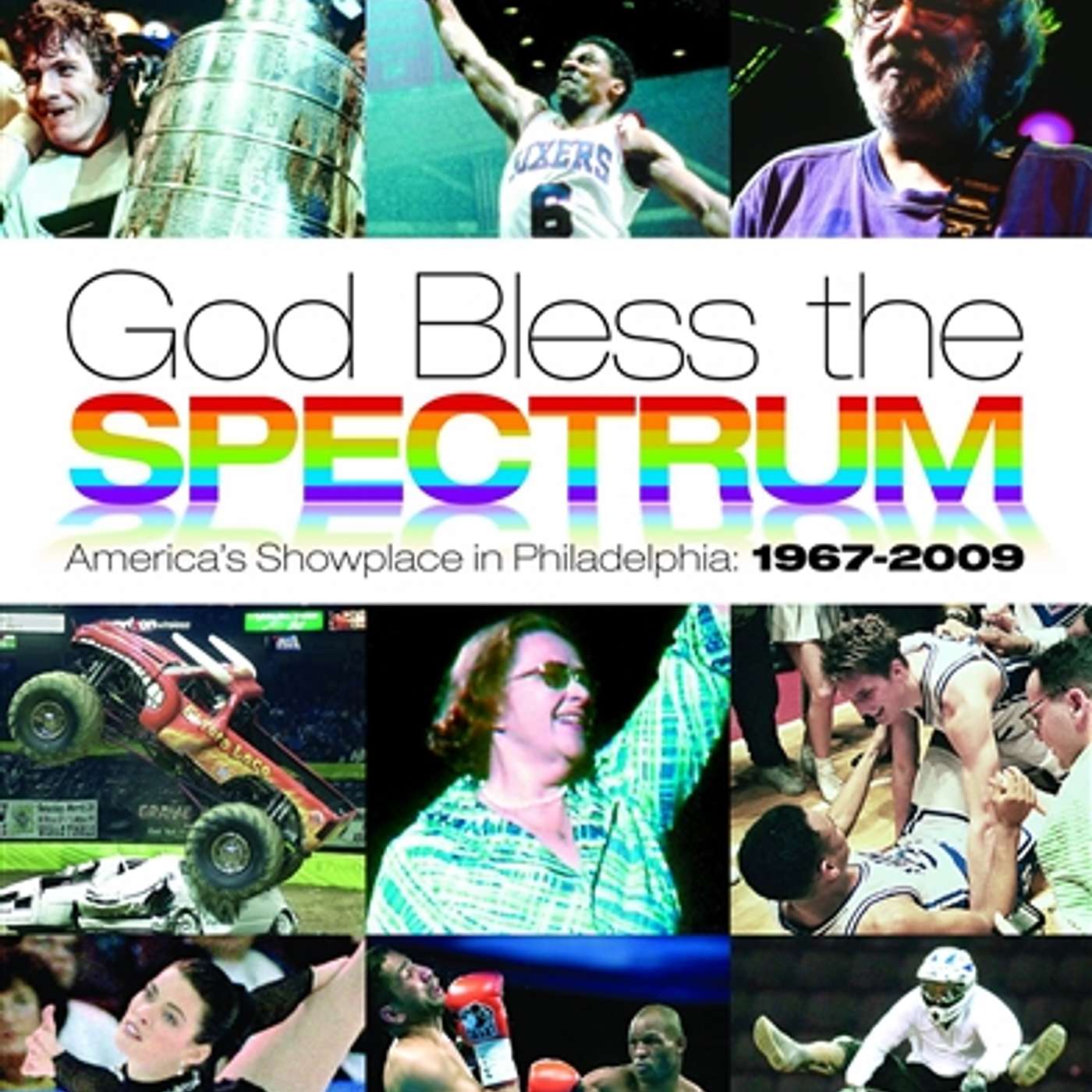
Ike Richman, the former VP of PR at the Spectrum for over 2 decades returns to give us the inside perspective and marketing behind the final season and events planned for the Spectrum's closing in 2009. Our session is dedicated to the personnel and fans who helped make the Spectrum "America's Showplace" during its forty plus years of hosting events and performances. The final celebrations are still talked about today and Ike's thoughtful creativity working with Chairman Ed Snider of Comcast-Spectacor (the owners of The Spectrum) for the closing events is greatly appreciated by fans who grew up at our beloved Arena. Reference to God Bless the Spectrum book is provided via link, a wonderful book dedicated the history of the Spectrum through photos and stories. Please listen to season 1 EP 12 with Ike and go inside the world of concert promotions.
God Bless the Spectrum: America's Showplace in Philadelphia, 1967-2009:
Ike Richman Communications:
www.richmancommunications.com
SPEAKER_00: Hey everybody, welcome back to the concert room. Inside the Philly Concert Experience. I'm your host, Bob Hill. The Concert Room is a podcast session dedicated to all the great performances and performers that are played on the stage at the legendary Philadelphia Spectrum Arena. The Spectrum held numerous events and concerts over its 40 plus years of existence, earning the nickname America Show Place. The Spectrum was a special place for music fans and bands. And today we have a great show. I've been looking forward to this.
SPEAKER_00: My guest joined me in season one, and I'd like to welcome back for another great session, and that is Ike Richman. Ike is the founder of Ike Richman Communications. His firm specializes in publicizing local, regional, national, and international sports, concerts, and entertainment events. And Ike worked for Comcast Spectacor, the owner of the Spectrum Arena, as the vice president of communications. His team handled all the promotions and PR for events, including, of course, concerts. And today we're going to go in depth a little bit more on a topic we touched briefly in our prior podcast.
SPEAKER_00: Towards the end of our conversation, we spoke about it briefly, and that is the closing events and the celebration leading up to the closing of the spectrum. And I'd like to get your perspective on this topic a little bit more in depth. Now, regarding the pending closing, what was the conversations like with Ed Snyder, the chairman of Comcast Spectacle? The actual decision is where I would like to begin. Did you guys know that the kind of writing was on the wall? The decision's going to come down, we're we're going to leave.
SPEAKER_00: Or did he just come out of the blue at a meeting one day, or this is the end? You know, we got a it had it had been talked about for a while.
SPEAKER_02: Yeah. Because there were some maintenance issues that needed to be done to keep it sustainable. And the question came up was is it worth investing the amount of money to maintain it? Will we see the rewards of that investment? And it looked like the answer would be no. Okay. So the amount of yeah, the amount of work required to upkeep the building and make it sustainable to have a minor league hockey team and maybe or maybe not an indoor soccer team, but uh concerts and other things, it just made it too feasibly impossible to sustain.
SPEAKER_02: So the decision was made at a certain time to announce it and use that time to have one final season of the Phantoms hockey team and then surround it with other things. So it got to a point where we uh met with Ed Snyder and came out with a plan of how and when we were going to announce it.
SPEAKER_00: Okay.
SPEAKER_02: And and when Ed was ready, we we had many conversations and and he he was upset about it. He he said people this building is special to a lot of people. And I I kept reminding him and I said, Ed, I don't want to seem insincere, but but yeah, we're we're we're gonna tear it down, we're gonna knock it down. But when you think about it, all we're really doing is knocking down bricks and mortar. We can never take away the memories of how special this place was. And he said, You're right, and make sure everybody knows that.
SPEAKER_00: That's great.
SPEAKER_02: And then what we did was to do it we didn't do a press conference, but what we did was we brought Ed back into the spectrum and we did a walk around the concourse and we videotaped it ourselves. And we sat Ed down and said, We're gonna ask you a couple questions and just give us your answers. And he said, Okay. And we took the tape and we delivered it to the media that the next day and said, We've made a decision that this will be the final year of the spectrum. And here's some sound bites of Ed Snyder.
SPEAKER_02: And we immediately went into marketing mode and said, Well, if this is the last year of the spectrum, how are we going to celebrate this? And we said, Could we get uh the Flyers to play a game in the spectrum again? And it was too hard to bring a regular season game in, right, but we did do two preseason games. Uh but the Sixers, we were able to get the Sixers to come back and play a regular season game. And they played the Bulls, and that was that was special to go back and see one more time, and the spectrum was fun to do that.
SPEAKER_02: We we had Villanova play Pitt that year, and Villanova was one of the top teams in the country at the time, and they came back and played a game at the spectrum. And what was what was significant about the Villanova situation is in college basketball to be eligible to play or or it it it's an NCAA regulation that Villanova plays select games at what's called the Xfinity Mobile Arena, which was Walls Farager Center, Core State Center, etc.
SPEAKER_00: Right.
SPEAKER_02: If they play more than three games in a season in which the venue will host a first and second round of the NCAA men's basketball tournament, they'd be ineligible because it would be considered quote unquote a home court.
SPEAKER_00: Oh, yeah, it is.
SPEAKER_02: So what what happened was that year that we were closing the spectrum, Villanova played their three games at the at the then the uh Wells Fargo Center. But we said, hey, we have a clause. You could play two in the spectrum and no one would know the difference. They're not hosting a basketball game in the tournament.
SPEAKER_00: That's right.
SPEAKER_02: So Villanova said, Yeah, that's a great idea. So we played Pitt at the Spectrum that year. It was great. And and it also, again, we we used that marketing minds and said, wait, this will be the last time you get to see the globetrotters in the spectrum, the last time to see the circus in the spectrum. And if you remember, there was one of my colleagues, Eric Namath, who was working with me at the time. He he said, What if we what if we took the globe trotters and played it on the roof of the spectrum?
SPEAKER_02: And what? I don't know if you remember that. We we had a globetrotter game on the roof of the spectrum, which had international c international coverage. It was one of the crazier things that we've ever seen, but it was it was spectacular. It was it was memorable. And again, it was how it kept raising the board. How do we celebrate this? And I think it was textbook uh the way we did it. I think any building that came down before or after was envious of what we did because we made it one of the greatest things ever because it was such a special place for so many people.
SPEAKER_02: They you you went to your first circus with your parents, or you went as parents with your kids for the first time to Disney on ISO or the circus. You saw your first concert at the spectrum. You went to the con you went to your first country without your parents at the spectrum.
SPEAKER_00: Like that's like a rite of passage in our.
SPEAKER_02: Yeah, I was gonna say it's coming of age. You you grew up in the spectrum in in many different ways. So we knew how special that was. And how are we going to celebrate it? How are we gonna remember that? And you remember people wanted a piece of the spectrum, so we sold the seats. People want like, and the seats did really well. Lou Scheinfeld came back, he was one of the original uh marketing minds for the spectrum. We brought him back to help us close the.
SPEAKER_00: Yeah, he gained the spectrum, didn't he?
SPEAKER_02: He sure did, yeah. He sure did, yes. And Lou kind of oversaw the selling of the seats. And then we we sat in brainstorming said, well, what else could we sell? Well, we cut up the plexiglass and we etched the autographs of the Stanley Cup team members and sold little pieces of plexiglass with their names on it. I had traveled to London, Ontario with the Flyers for a preseason game, and at a bar they put a drink a drink on a coaster, but the coaster was made of ice.
unknown: Oh my god.
SPEAKER_02: I said, How's that possible? And he said, Well, it's sort of like see-through plastic, and we we put water in there, we keep it in a chiller, and then we put your beverage of choice on top of the ice part.
SPEAKER_00: So what are you doing? So when I came back, I said, Yeah, oh absolutely.
SPEAKER_02: I said, What if we took the spectrum ice and made coasters out of the spectrum ice and we found the manufacturer that did it, we melted the ice and then shipped the water to the to the manufacturers, and they made coasters with the spectrum ice.
SPEAKER_00: I did not know this.
SPEAKER_02: Yeah, we did that, and it was always trying to what else can we do? And we'll get to the concerts in a minute, but so many people had so many special memories. So we we did a last stroll. We couldn't call it the last waltz. I think somebody else made that popular, if you remember. Yes. So we did the last stroll and invited people to come down for just take a walk, just just one more time in the spectrum.
SPEAKER_00: Right.
SPEAKER_02: And we let you go anywhere you wanted. And they many people went in the flyers locker room and they were writing on the chalkboard where Frank Shiro had once wrote, Walk today, win today, walk together forever. People were getting their photos in the locker rooms or on the uh on the concourse. People were just just walking around and enjoying it. We had the stage set up and just live. I think WIP was live that Saturday morning. Yeah. Just let people come and just let people hang out. And again, it was what else can we do?
SPEAKER_02: This this building meant so much to so many people. How do we let them celebrate and and remember it? And those were parts of it.
SPEAKER_00: So yeah, it was sort of like two parts. I mean, everybody that worked in the building, and then you're honoring people that built it and and and made it what it was, and then and then for the fans, right? So that's yeah, not to interrupt, but that's always from a fans perspective, because I've actually been talking about the closing events within the past month with a prior podcast and everything else. But from a fans perspective, we always you know really just wanted to say thank you because you could have just closed it.
SPEAKER_00: You know, you made a decision, these are the scheduled events, we'll make a decision, we'll make an announcement, and then here's the target date, we're done, demolition. But you guys didn't do that, like you said. You just went through this whole thing just now where you just really were thinking about honoring the people that work there, your your teams now that right. We did honor the staff.
SPEAKER_02: We did a staff party, we had a staff reunion for anybody that had worked there. We brought them back for a special night. And when I sat in Ed's office, he he said, What do you uh early on? He said, How do you want to do this? What do you want to do? I said, Well, I have three things I want to do. I want a book, I want a documentary, and I want a website. And he said, Great, you don't have any budget, so you figure it out. So I said, All right, how am I going to do a book about the spectrum without a budget?
SPEAKER_02: I like I got to hire writers, I got to get photographers, et cetera. And I went and saw Pat McLune of the Philadelphia Daily News at the time. Pat was the managing editor, one of the senior people at the at the Daily News and a good friend. And I said, Pat, you had just published a book about Philly's Win in the World Series. Well, could we do one about the spectrum? He said, Absolutely. So he partnered with the publisher and they took the risk. They said, We'll we'll put up the money and we'll split the proceeds.
SPEAKER_02: And I said, Well, we'll give you access to our archives, we'll give you access to Snyder, we'll give you anything you need, but let's make this book the best it could be. So they used some of their photos from their archives. We opened up our archives. We put them in touch with certain people that we thought were that warranted it. We sat down and brainstormed some unique things, and I had said to them, there's there's lots of fun things that happen in the spectrum that people remember but might not remember, like the roof blew off.
SPEAKER_02: People remember that. Yes. Or the ru or the Russian game. And I I said, I said, also, there was a game. I remember it, it's when the Philadelphia 76ers, it's a it's a trivia, it's a the answer to a trivia question.
SPEAKER_00: Okay.
SPEAKER_02: There are six there are six players that played for both teams in the same game of an NBA basketball game. It was the Sixers and the New York Nets at the time. I think Kevin Lauder Lockware was the coach, and I think he got like called for three technical fouls, but they uh they made a mistake. So the game, the game was protested. It played in November, and the the the Nets protested, the said we we we don't like the way this ended. It it something was rigged or not right. So the NBA said, okay, we are going to replay the fourth quarter the next time the two teams meet in Philadelphia.
SPEAKER_02: Well, that wasn't until March, but what happened in the meantime was the Sixers had a trade. Uh Harvey Catchings and Eric Money, Ralph Simpson, etc., okay, were traded from different teams. So when they came back in March to play the game, the players said, So wait, do we go back to our original team?
SPEAKER_00: Oh my god.
SPEAKER_02: And the NBA said, No, you you just you play for the Nets now. So if you look at the stat sheet, there's three guys, there's three guys that play for both teams in the same game. And also what's what's of interest to that game is that was the only time there were six referees used in an NBA game because they couldn't get the same crew to come back in. So I that is weird.
SPEAKER_01: Right. I told the Daily News.
SPEAKER_02: I told the Daily News, you make make sure that's in the in the book. So that's in the book. And then I would I would look through the stats and I I found every result of every WW, WF, then the WWE or the WWF, whatever they called it, all the way through. And I calculated who was there the most and saw Bob Backlund, followed by Bob Hulk Hogan and then Bruner Samartino, and I would keep track of that. Or I looked up every time the circus played and every time it did, who was in the show and found out that Gunther Gable Williams played the Spectrum more than anybody else.
SPEAKER_00: That's right.
SPEAKER_02: Because he would do like 20 shows at a time. Yeah, they'd set up over over 30 years. So he you know he could have been there 500 times. So we we put all kinds of stats together. So that's how the book came together. And then there was a guy, Roger Barone, who he listens to the podcast and is friends with you, Bob. He took photos growing up at the spectrum and he offered us his photos, and he became sort of a photo director or photo editor of the book, and was an integral part of the success of that book.
SPEAKER_02: And we were fortunate that the book came out and it had to go through multiple printings because it kept selling out.
unknown: Yeah.
SPEAKER_02: So that yeah, go ahead. God bless the spectrum. And uh so checkbox one, book done, over. The next was how are we going to get a documentary? He said I don't have a budget. So luckily, Comcast Sportsnet was right down the hall. They they got in on this early and they found Christian Leitner and asked him some questions about that famous shot against Kentucky when he was playing for Duke in the 1992 East Regionals.
SPEAKER_00: Legendary shot.
SPEAKER_02: They they got a hold of Gretzky and asked him what was it like to play in the spectrum. And he said, I'll never forget Gretzky said in the 1987 Stanley Cup Finals, it was a good thing game seven of the finals was played in Edmonton because there was no way they were going to win in the Cup in the Spectrum. So he he he was great. And then Brad now was the producer of that. Brad was a great guy that worked in the newsroom, and he would come to me and said, Okay, how who who could else can we get for this?
SPEAKER_02: And I said, Well, we could ask, you know, different entertainers, and we we got Trey Anastasia from Fish, who grew up going to concerts at the spectrum.
SPEAKER_01: Yep.
SPEAKER_02: We were able to get Billy Joel to sit down and do it, and I was able to get Mickey Hart from The Grateful Dead to do some stuff, and and The Grateful Dead played more than anybody else. And we had a lot of fun talking to Mickey about the spectrum, and we had a lot of fun talking with Billy Joel was great. He he was he just couldn't stop saying things about the spectrum, he was great. So check the box on that number two for the documentary. And the third was we wanted a website, and we called it rememberthespectrum.com.
SPEAKER_02: And we that's where we put up all those concert archives, and and that became a retail outlet for us. We were able to sell t-shirts and merchandise and the seats, and it really became the website to go to to purchase your seats, but we were able to use it to share stats and information and and other inform uh things about the spectrum. So checkbox three, we got all three things done. So that's kind of how we celebrated it, and then it was meeting with our partners at Live Nation who had a vision for how they wanted to see the spectrum close, and they started putting the word out that this was going to be the last year of the spectrum.
SPEAKER_02: And Boost Springsteen said, Hey, I'm I'm on tour, let's let's do a couple shows. And if you remember, he played in April of 09, right, and they were so popular that he came back and did I he came back and did four more in October. He would he was like he didn't want to close it, he didn't want the spectrum to go away. He he could have kept playing there.
SPEAKER_00: Yeah, that was gonna be one of my questions, because okay, we have all the events like from a marketing, we have that the the three things that you mentioned now. The physical events, I always wondered with Joel and Springsteen, because they did play prior, all of a sudden they they did come back, and I was wondering, and yeah, I think you just answered that. You reached out and they said, Yeah, we're gonna come back. Springsteen did, like two weeks, I think, before the closing in October. Right.
SPEAKER_00: Like you just mentioned. Billy Joel also came back, right?
SPEAKER_02: Billy Joel is not he no, he didn't play the spectrum because he was doing that residency at the ballpark at the time. He was doing those once a summer at Citizens Bank Park outdoor shows. Okay. So he had kind of outgrown the spectrum in Philadelphia to do stadiums. But the dead came back, Bobby Weir and Phil Lesh came back and did two shows in May of 2009. So we were able to get The Grateful Dead, were able to come in. Springsteen was able to come in. Uh Neil Young came in and closed uh part of that that uh show.
SPEAKER_02: We wanted to do something fun that was Philadelphia-ish. And we ended up getting Hall and Oates and the Hooters and a couple other of local bands that that had an affection for the spectrum. And that was called they played right before the Pearl Jam shows.
SPEAKER_00: Right.
SPEAKER_02: And then then we had Four Nights with Pearl Jam, which were incredible nights, just incredible nights. And and people always say, Well, why did Pearl Jam close the spectrum? The answer is they wanted to. They saw an opportunity. They were huge, huge fans of the Sixers and Dr. J and said, Why not? Let's do it. And they had already closed Chicago Stadium in Chicago, Illinois, and said we would love to close the spectrum. And they put together four nights. They were they they really planned out what they were going to do.
SPEAKER_02: And the last night was Halloween, and they came out dressed as Devo and did Wibbet. And it was just special.
SPEAKER_00: That was the longest night they ever played, I read. And I did a tribute to them with the closing events. And they I think they played like almost three hours, and they were they just played another three hours.
SPEAKER_02: They were having so much fun.
SPEAKER_00: Well, my question, okay, so you mentioned the Hooters, the Todd Rundgren Hall Notes. This is October 23rd, I believe. Right. The last call concert. That's right. That's exactly what it was. Yeah. Was this the concert where you rolled back the tickets to with the prices of when the spectrum opened? So maybe like four dollars, four fifty.
SPEAKER_02: I don't know if they were that priced, but I think they were more reminiscent of an uh earlier era of the spectrum.
SPEAKER_00: Yeah, gotcha. Okay. So that wasn't going to be the last event. You already had Pearl Jam booked for the last thing, or did you think Pearl Jam was already booked, sold out, and ready to go.
SPEAKER_02: This was a another opportunity to just get people to come in and celebrate. And I remember sitting in meetings with the promoters from and the staff from Live Nation, and I came in early and said, Well, what's the last show going to be? Answer was they're all the last show.
SPEAKER_01: Right.
SPEAKER_02: And I said, you know what? You're right. They are all the last show because they're all gonna be the last show. Like it it they they were all special. And it was really it was really special that they were all the last show.
SPEAKER_00: Yeah, and you were having a lot of fun at this point. Yes. I mean so was everybody as far as emotionally, it was just fun, reflective, proud, kind, you know, during this time, right?
SPEAKER_02: I mean, I can imagine it was just the answer to that question would really be anybody that's listening to your podcast because they would tell you how much the spectrum meant to them and and that they were able to go back one more time or they were able to celebrate it one more time. So I I think that that would be the answer to this. But from our standpoint, we thought we gave everybody a number of opportunities to come back and celebrate it one more time, or to see something one more time, whether it was the circus, a concert, the Sixers, the Flyers, everybody got a chance to come back at least once and and be a part of it for one more time.
SPEAKER_00: Right. And then you had the last stroll, which that was a public.
SPEAKER_02: That was I think that was right before that was right before Pearl Jam. That was, yeah, they were ready to move in, but that was that was that I think it was like a Saturday, and then Pearl Jam came in Sunday, Monday. Right. And then they were off Tuesday, Wednesday, Thursday, something like that.
SPEAKER_00: So the last stroll, from what I understand, is a free public event. Right, before the final concerts, fans could walk through the building, right? That's right. Explored the uh floor, locker room. I guess the stage was already set up, if I remember for the concert. Yep. Flyers players were there, I think somebody mentioned Bernie Pront. You can meet, go up into the press box, and just walk around the spectrum and take pictures, right? Just uh last stroll.
SPEAKER_02: Just wanted everybody want another chance. And then Bob, we didn't we didn't even get to when we finally got to the date for the wrecking ball, right? We were in touch with the construction company and they would tell us, they would say, Hey, it looks like it's gonna be November 23rd. And uh they said, Well, we we have to prep the building, we have to do certain things to get the building ready for demolition, etc. etc. And they said they said to get the building ready, this Saturday is gonna be the last day, the last day for you to walk in there if you wanted to.
SPEAKER_02: This could be your last chance to go in there one more time. So we we said, what if we let people uh bring their own tools and go in and take whatever they wanted as a souvenir? And we we met internally and and we loved the idea, but we didn't get the approvals from the insurance company to let people take their own tools. So we came up with a different concept that was called if you can carry it, you can keep it.
SPEAKER_00: Oh, yeah, that's right.
SPEAKER_02: So we we let people go in there and people paid twenty-five dollars for charity and let them walk around the arena and take anything they wanted. And there were chairs, there was fasher boards, there was pieces of the court, there were computers, there were office chairs, just different things, and and let people take their own souvenirs home.
SPEAKER_00: Yeah, and bricks, of course, right? Uh yeah, bricks too. Yeah, I know somebody who has got two seats. They have an older seat, like the cloth, and then the newer ones with the vinyl, yeah. So yeah, he went down there and and he said it was just awesome to walk through and just I used to wander around the building with my camera.
SPEAKER_02: And if if you if you're listening to the podcast and feel compelled to go to my Facebook page, it's my first and last name, Ike Richmond. You want to go and go back to way, way, way, way, way, way, way back to early parts of my Facebook page. I used to take my camera video and still and walk around and say, This is so and so, and this is so and so. And I took all kinds of pictures. So there's some old video of me walking around, and you got to see some fun stuff behind the scenes. And we we we loved it.
SPEAKER_02: People, I remember we the Philadelphia Inquirer called me and said, I guess you're not demolishing the spectrum. I said, I'm sorry, what do you mean? He said, Well, you've been you've been touting the spectrum is coming down forever. I drive by it every day, it looks the same.
SPEAKER_00: Keep having events.
SPEAKER_02: So I said, What are you doing tomorrow? I said, What are you doing tomorrow? He said, Why? I said, Why don't you come down and I'll show you? I said, when you do a demolition, you do it from the outside the inside out. And he said, What do you mean? I said, Well, you have to get rid of certain things. The electric electricity has to go out, certain structural things have to be changed. He said, I didn't know that. I said the plumbing has to be redone and removed. So he came in and he said, Oh my gosh, I had no idea.
SPEAKER_02: This is like a skeleton, this building.
SPEAKER_00: Yeah, it was piece of it.
SPEAKER_02: All you see is the outside. I said, Yeah, that's how you have to do it. So when you come back, all we're gonna do is just hit the wall and that's it. But we had been working for months to dismantle everything inside. He had had no idea, and most people didn't. But then then we finally got the date. It was, I I think off the top of my head, I think it was November 23rd. Yeah, and again, Snyder said, Yeah, Snyder said to me, He says, What do you want to do? I said, Well, I'd like to do it out in the parking lot, have a couple of speeches, and and have like tell people to do the wreck and ball, watch the thing.
SPEAKER_02: And he said, Well, who do you have in mind? I said, Well, Bob Clark and Bernie Perant were probably the two greatest Philadelphia flyers to ever play in the spectrum. They got to be there, speak. Dr. J was the greatest sixer to play in the spectrum, he's got to be there and speak. He said, Okay, you can get them right. I said, Yeah. So we called all three and they they agreed to do it. And he said, Well, what else do you have in mind? I said, Well, you speak, the mayor can speak, you know, Peter Luca will speak.
SPEAKER_02: He's the president of Kopkeh Spectral Course. So he said, Great. What else do you have in mind? And and if you remember when Springsteen was clo played the spectrum, he played a song called Wrecking Ball, which he ended up releasing, but it was it was kind of about giant, it was, I think it was more about Giant Stadium.
SPEAKER_01: Right.
SPEAKER_02: But he would uh adapt the lyrics to Philadelphia and talked about the spectrum and airplanes the size of cheese stakes the size of airplanes, and Dr. J played the game. He he made it Philadelphia. He also, before the show, he came out, he said, I thought they were tearing this place down. I came here in April, played the spectrum, it's still here. I'm gonna play it again. So he played wrecking ball. Well, the NBC 10 recorded that from news and sent it to me and said, Hey, here's about a minute and a half.
SPEAKER_02: We were only allowed to film a minute and a half. If you want to use that, go ahead. Oh so I had to I had to write a letter to Springsteen's management and asked, could we have permission to use this? And they said, Yes. You have exactly a minute and a half to use, that's it no more.
SPEAKER_00: Oh, at the survey, right? When they got the ball going.
SPEAKER_02: So I said I said, Can we say Bruce Springsteen? They said, Yes, you can do all that, but don't make people think he's gonna be here.
unknown: Right.
SPEAKER_02: So we never told people who was gonna be the music that we were gonna do leading up to it, but after everybody had spoken, they handed me the mic, sort of like the voice of God, and I said, At this time we direct your attention to the wrecking ball, and will you please welcome an artist that has played the spectrum almost the most, not as much as The Grateful Dead, but please welcome Bruce Springsteen in the E Street Band. And they just played the audio portion of what they had recorded. Wow. And he came, you know, as Springsteen singing about the wrecking ball, and then the wrecking ball took a couple swings at the building.
SPEAKER_02: If you remember, it kind of bounced off. It didn't happen. It didn't have the momentum it needed, and it was funny, yeah. Yeah, I think the the memories will continue to live on, especially on a podcast like this, and people telling stories. And you ask anybody in Philadelphia about the spectrum, they they will have many memories, and most people will have different memories from somebody else. And that's what was so fun about the building is everybody has a special memory, and it might mine might be different than yours, might be different than your neighbors, and might be different than the guy down the street, but we all have something that we hold on to from that building.
SPEAKER_00: Yeah, exactly. And you know what's kind of ironic to me, well, I don't know if it's ironic, but it's interesting to me that the very first concert was the Quaker City Jazz Festival in '67. That was the first official opening of the arena. And then the very last was, you know, Halloween night with Pearl Jam in 09, closing their arena. So that's kind of bookends with music, you know, even though it's uh built for the Flyers, you know, the new franchise, etc. But I just thought it was kind of cool that the first event bookend it with the last event were concerts.
SPEAKER_02: Yeah, when one of the earliest one of the early conversations about closing the spectrum was they had suggested closing it on September 30th because that's when it opened. But if we had if we had closed it on the 30th, you wouldn't have had those four more Springsteen shows, the four Pearl Jam shows, the Holland Oath show. You wouldn't have had some of those shows that we were able to get. So I'm glad it didn't close on the 30th.
SPEAKER_00: Was there any events that were talked about that couldn't fit in for whatever reason? Or just this was it?
SPEAKER_02: You know, the the I think I think we I think we he took we had we had committed the Pearl Jam. They were going to close the building. Yeah. And I think we were starting to get, hey, what if we did it? You know what? Unfortunately, it's too late.
SPEAKER_00: You could go on, Ike. Yeah, that thing wouldn't wouldn't close down the city.
SPEAKER_02: Unfortunately, we we yeah.
SPEAKER_02: We said we we were closing it on Halloween night, and that's when we're closing it. We had to stick to that.
SPEAKER_00: Yeah, yeah, that's right. And then the very last event was the private concert. If I remember, well that that's the trivia.
SPEAKER_02: That's the trivia question. So they had a they sort of had a reunion of former employees, but there were some that somehow didn't get invited or didn't get included, or we just found out about it too late. So Ed Snyder said, that's not how I want this to go to end. I want I want to have one last chance in the spectrum. And he he wanted his party. So he said, What if I could what if I could host one? And we ended up getting Earthwind and Fire to close the spectrum, and he got to invite whoever whomever he wanted, a staff party.
SPEAKER_02: And I think we brought back some of the Broad Street bullies. We had the Stanley Cup there.
SPEAKER_00: Oh, wow.
SPEAKER_02: And yeah, it was just a so the trivia question the answer to the trivia question is who was the last concert at the spectrum? The last concert was Pearl Jam, but who was the last band to play the Spectrum? That would be Earth, Wind and Fire.
SPEAKER_00: Earth Wind and Fire, yep. First pub last public was Pearl Jam, and the last actual band was the last band to actually play.
SPEAKER_02: And that there's a little bit of a trivia question for JFK Stadium, too. The last concert at JFK Stadium was The Grateful Dead.
SPEAKER_00: That was the dead.
SPEAKER_02: But the last band to play this that JFK Stadium was actually the Rolling Stones. Because once the stadium was condemned and no longer able to be used in July of 89, the Stones were getting set to open their steel wheels tour at the vet in August of 89 and used a stage at JFK as a rehearsal stage and held a final dress rehearsal at JFK on August 29th of 1989, I think it was. Yeah. You can look that up, yeah. So they were the last band to play JFK Stadium. Awesome.
SPEAKER_00: Little little trivia for you. That's good trivia. I learned a lot. I mean let me back up real fast before I forget. The documentary, I've actually never seen that. So is that still out on circulation?
SPEAKER_02: No, that was that where is that? I'm glad you asked that question because it wasn't really a true documentary that you could buy or order. It was sort of a special that aired on Comcast Sportsnet multiple times.
SPEAKER_00: Okay.
SPEAKER_02: And it it aired on their then it was on demand for a while, and and it was sort of a what they did was they they they did their own sort of remember the spectrum segments. And I told you they had interviewed Wayne Gretzky and Christian Leitner, they got Billy Joel and Mickey Hart. And what they did was they they would use those in like the newscast, and they would say, Hey, coming up a tribute to the spectrum was like a three-minute segment. What they did is they compiled all of those segments and made it a one-hour show.
SPEAKER_00: Oh, gosh. Right. Okay.
SPEAKER_02: So it and it aired, you know, like when there wasn't a wasn't a Phillies game or a Flyers game. It was just an opportunity to fill time.
SPEAKER_00: Yeah.
SPEAKER_02: And that's what they did.
SPEAKER_00: Or like a rain delay or something, you know.
SPEAKER_02: Right, right. And then it was on demand for a while. I somebody probably has it up there on YouTube somewhere. You probably could find it. Brad now had given me a bunch of DVDs. I used to keep them in my office closet, and anybody that would say something, I'd say, hey, here's one of these. Here, take one of these. I used to give them out to people all the time. I'd I've if I looked in one of my file cabinets, I probably still have one or two of them somewhere in my basement. Wow. But I I I don't know where else you would be able to find it at this time.
SPEAKER_02: But it was it was a fun show to watch.
SPEAKER_00: Yeah, I think I asked you this in our first conversation season one when we went over, you know, the promotions and PR of concerts at the spectrum. Did you hold do you have any memorabilia besides do you have those calendars still?
SPEAKER_02: Or did you No, what I what I took was when I would work a show, I sat in the press box. And if you walked into the press box, you pull the door open, and there was a row in front of you, and then there was a row, there were two rows of row one and row two. To get to row two was sort of the step step store, like a two two steps. Okay. And it was carpeted, and people would just step up and go into the row. I would stand on that or sit on that because that would be my seat. So I took, I took that, I took that home.
SPEAKER_02: So I I owned that. And there was also there was also a swing gate in the foyer of the press box that led you downstairs to the backstage area, the catering area, the dressing rooms. And Charlie Abel was the security guard that would be in charge of that. He would say, You can't go down here, you'd have to keep the gate open or close. I took the gate. That's that's in my basement. Oh, nice. I kept that gate. It was sort of I was always the one sitting there watching him open and close the gate. So I I kept that.
SPEAKER_02: I took a couple bricks from the press box, not the outside of the building, but I have a couple bricks that I I saved. And also uh when they melted the ice, I I took a a water bottle and filled it with some water from the I some ice and it melted. I still have it. Yeah, so I have that and that sits in my basement. I don't know what I'll ever do with that, but I have it still.
SPEAKER_00: It's great.
SPEAKER_02: And actually, when we when we in the Phantoms, uh a little bit of trivia for you also, when the Phantoms left the spectrum, they now play in Lehigh Valley, but there was somewhere they went before they went to Lehigh Valley, people forget they played in Glens Falls, New York.
SPEAKER_00: Okay.
SPEAKER_02: The Glens Falls Civic Center. And what we did for the team was we melted some of the ice from the spectrum, put it in containers, and shipped it up to Glens Falls, and dropped it on the ice there, so they got to play a little bit still on their home ice, if you will.
SPEAKER_02: Just had some fun. It was a neat little connection for them, but they they played on spectrum ice technically because we used some of the ice from the spectrum to build the ice at Glensfall Civic Center. So we kept the continuity for them, if you will.
SPEAKER_00: Absolutely.
SPEAKER_02: A lot of fun.
SPEAKER_00: Yeah, well, listen, I am actually looking at the God Bless the Spectrum book right now, and it's awesome. And uh I'm gonna put the sh link to the show notes. Uh, is it still is there a link?
SPEAKER_02: You probably could find it online somewhere, maybe used. And and and and Bob, I I really appreciate you putting me on here, but I I just want to say I I mentioned a lot of people's names that were instrumental, and I'm sure I missed a lot of people. So I I if I miss somebody for their heroic efforts in working at the spectrum, keeping the spectrum maintained, saving the spectrum, remembering the spectrum, I apologize, but there were many of us, and I'm just one of many of the team that that was part of an incredible team that that kept that building going.
SPEAKER_02: So on behalf of all of them, thank you for thinking of the spectrum, remembering the spectrum, and celebrating the spectrum.
SPEAKER_00: Yeah, absolutely. And as far as fans, we thank we thank you and Ed, Snyder, and Spectacor, all the personnel, and obviously you and your team for for these events and and thinking about all these events were just absolutely great. So we we thank you. It was very thoughtful.
SPEAKER_02: Yeah, let's do it, let's do this again soon and and and we'll find something else to celebrate about the spectrum. We'll remember the spectrum. And absolutely if fans want to you can connect them through social media to me. And if they want to share anything or have a question, they can always write or share some thoughts. Absolutely. And we'll we'll keep the keep the conversation going. And one one last time, remember the spectrum.
SPEAKER_00: Absolutely. That sounds great. Ike, I uh really appreciate taking the time. Great information, learned a lot. Thank you. And that was fun. Um, yeah, a lot of fun, always is. I love talking about it, and I appreciate your insight. Yeah.
SPEAKER_02: Uh stay in touch, Bob, on all the best to you. Thank you again.
SPEAKER_00: I will, Ike. Thank you. And there it is. I hope you enjoyed our conversation. A lot of uh in-depth uh inside the final season celebration of the legendary Philadelphia Spectrum in 2009, and it's great. Um really appreciate Ike taking the time and giving us his perspective uh and all the events uh that he helped create with uh his team and uh all the personnel, and of course, with um Ed Snyder and Spectacor, the owner of the Philadelphia Spectrum. I hope this conversation really kind of brings it all home with what we've been talking about the last couple of podcasts.
SPEAKER_00: Uh the celebration, you know, of the closing of the spectrum. It was uh uh bittersweet time for for everyone. As I mentioned, uh, you know, they took it down brick by brick. We can never take away the memories. And uh this podcast is one way that we'll always keep the memories going. And of course, we did talk about the book, uh God Bless the Spectrum. It is a great book. I'm gonna put a link there where you can find it. I highly, highly recommend you go out and you buy it, uh, just for history's sake.
SPEAKER_00: Great photos, uh great history of the arena itself and and uh all the events, including concerts. It's a very important book uh here for us who uh grew up at this spectrum. So thanks again for tuning in and uh feel free to leave a comment and of course subscribe. And uh I'm Bob Hill. I look forward to more shows like this and of course more featured performances on the spectrum. Thank you again for joining me in the council.
 Apple Podcasts
 Castbox
 Castro
 Goodpods
 Moon FM
 Overcast
 Pocket Casts
 Podbean
 Podcast Addict
 Podcast Republic
 Spotify